
News
Oct 2026: Salamanca – Part II
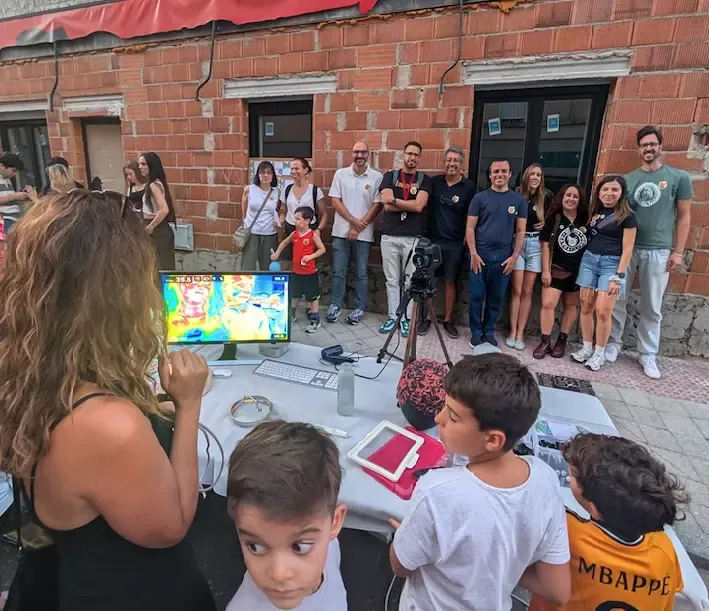
The second half of my research stay in Salamanca brought several more memorable experiences. Together with the EMC³ research group, I took part in the European Researchers’ Night, where we hosted a stand on climate change education. One particular highlight was our infrared camera, which makes thermal radiation visible and quickly became a favourite with visitors of all ages. I also had the opportunity to give a talk at the Facultad de Educación, presenting two current strands of my research: how students interact with ChatGPT and how people evaluate scientific claims. On 2 October, my time in Salamanca came to an end. I am very grateful to Camilo Ruiz Méndez and the whole group for such a warm welcome and for a month full of conversations, new ideas, and experiences. I am leaving Salamanca with a lot to take home with me — both scientifically and personally.
Sep 2026: Research stay at the University of Salamanca
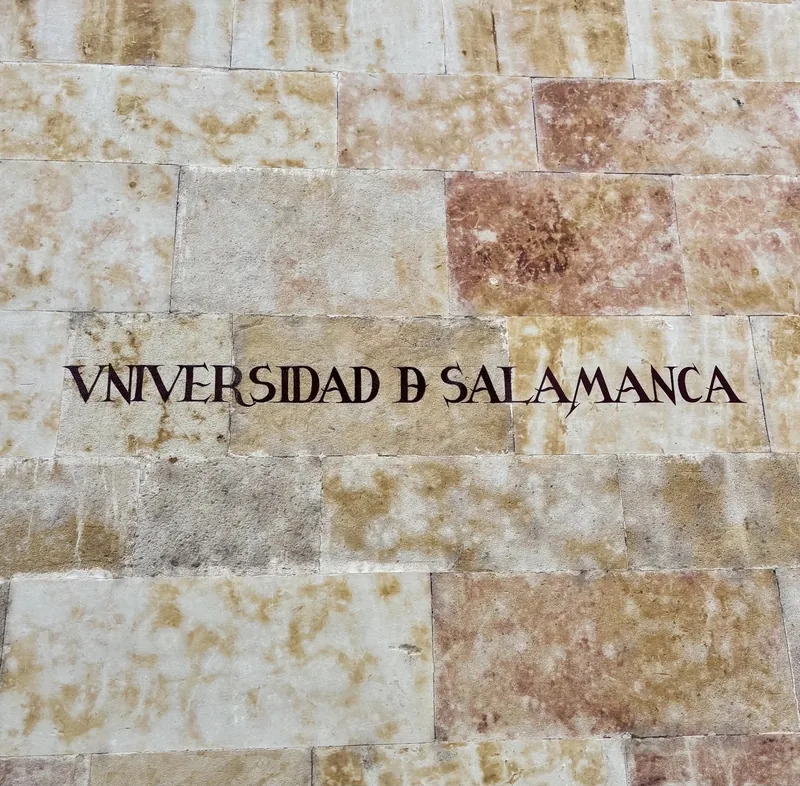
From early September to early October, I am spending a month at the University of Salamanca, supported by Erasmus+. I am visiting Camilo Ruiz Méndez and the EMC³ research group, whose work focuses, among other topics, on climate change education. During my stay, I am getting to know their approaches to research and teaching in this field and am involved in Climate Stories, a project exploring how a DIY storytelling approach can support climate change education. Beyond our joint work, it is a wonderful opportunity to exchange ideas, develop new perspectives, and experience academic life at one of Europe’s oldest universities. I am trying to absorb as many new ideas, experiences, and impressions as possible — both at the university and in the beautiful city of Salamanca.
Aug 2026: ERIDOB Conference in Ljubljana
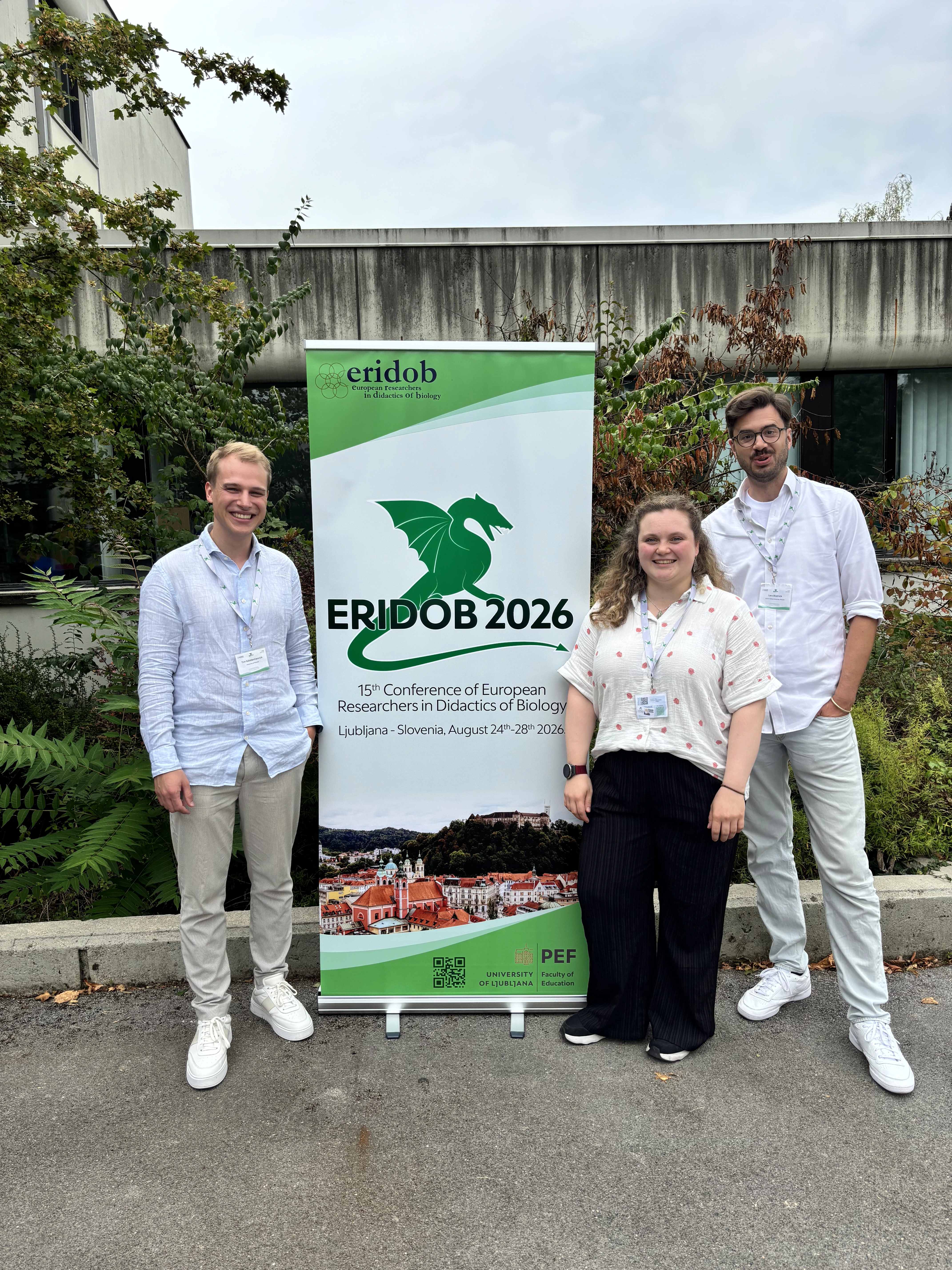
In August, our PhD student Stella Mehl and I attended the ERIDOB Conference in beautiful Ljubljana, Slovenia. Stella presented a poster on her PhD project on fostering data literacy using authentic data on insect decline from the Krefeld study. I contributed two posters on ecological literacy and plant awareness and was happy to see further collaborative work represented at the conference: Marcia Eugenio-Gozalbo from the University of Valladolid presented findings from the Miniature Landscapes project, combining biodiversity education and art, in which I was previously involved. Tim Göddenhenrich from the University of Münster, a colleague from our DUDa project, also presented first findings from his work with health data in the classroom. Beyond the scientific program, it was great to meet so many colleagues from across Europe, have inspiring conversations, and develop ideas for future collaborations. Altogether, it was a very enjoyable and stimulating conference. And Ljubljana provided a wonderful setting!
Jul 2026: Summer School on Alpine Plant Ecology at the Furka Pass
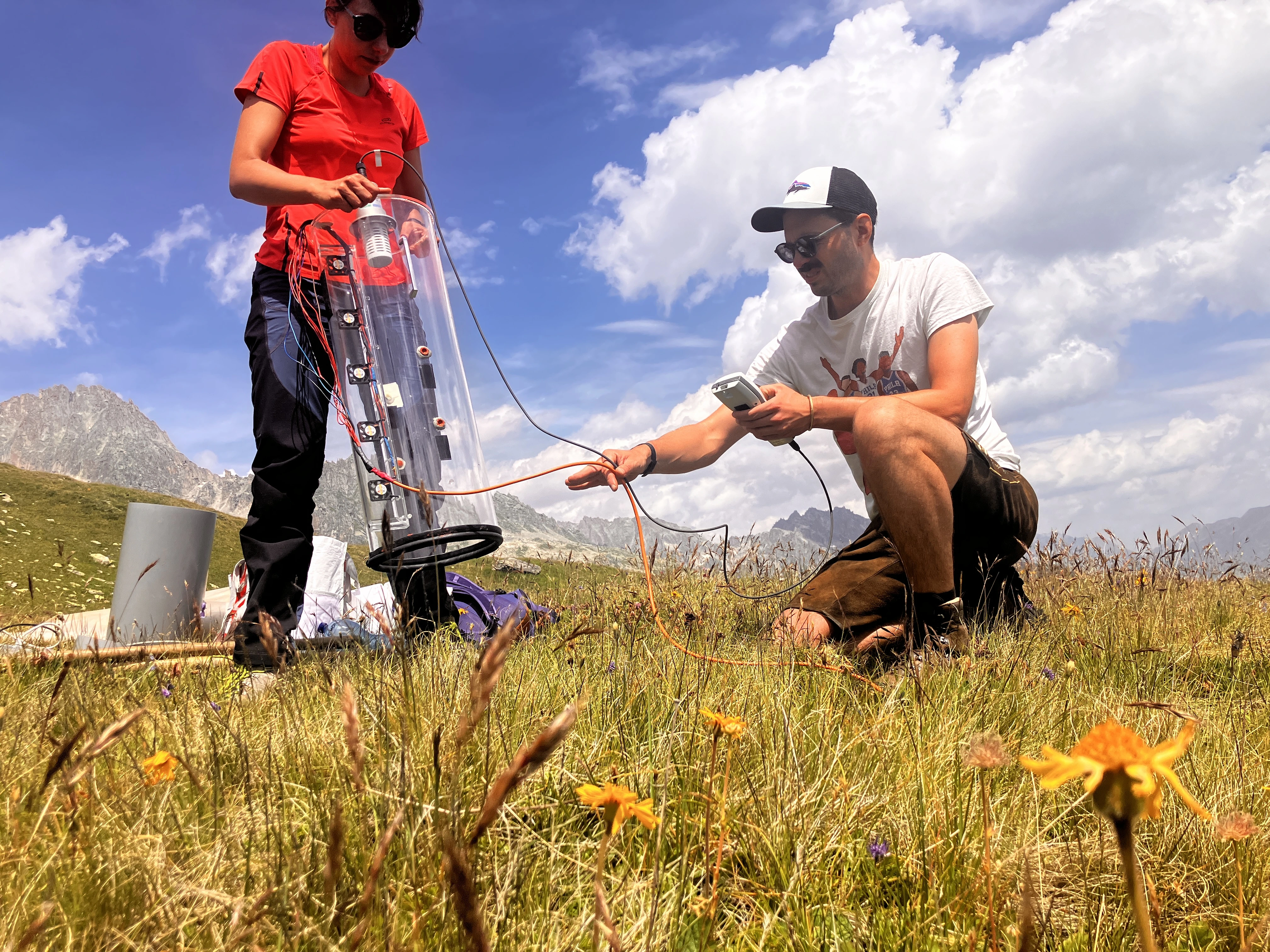
From 12 to 18 July, the annual Summer School on Alpine Plant Ecology once again took place at the Furka Pass in the Swiss Alps. Together with Christian Körner and Erika Hiltbrunner (University of Basel) and Martin Gruber (University of Graz), I had the pleasure of introducing 25 international students to alpine plant ecology during an intensive week at 2,500 m above sea level. The atmosphere was focused and enthusiastic, while the mountain weather was, as always, rather changeable (although I cannot remember ever experiencing such warm conditions up there). It was an intense and rewarding week, culminating in the students successfully completing and presenting their own projects. A huge thank you goes to Erika Hiltbrunner and the ALPFOR station for organizing and hosting this unique course. It remains a special experience every year — and one from which I continue to learn a great deal myself.
Jul 2026: Biennial Meeting of the IHPST in Lisbon
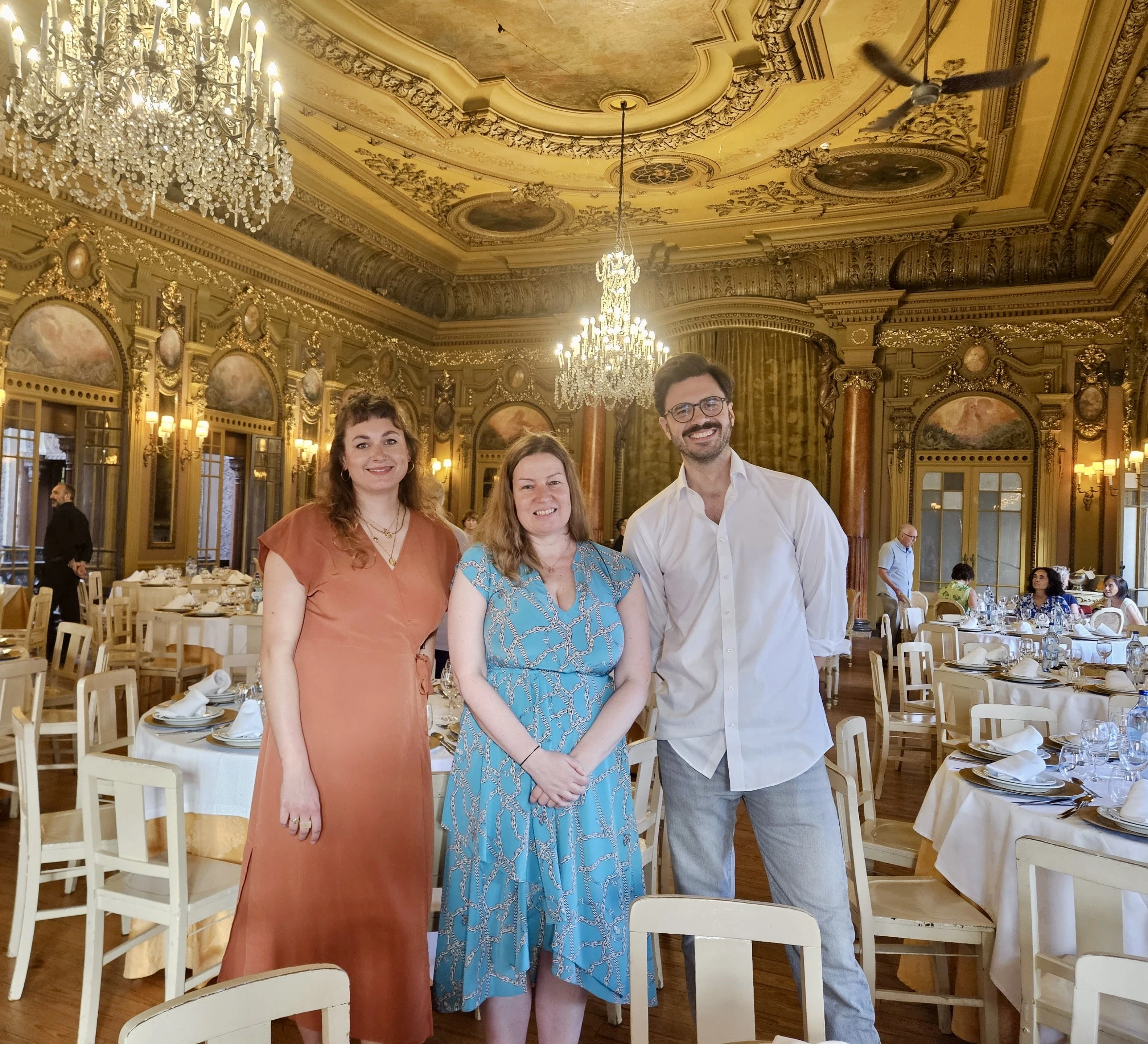
At the beginning of July, the biennial meeting of the International History and Philosophy of Science Teaching (IHPST) group took place in Lisbon. Kerstin Kremer, our PhD student Sophie Kurschildgen, and I joined the meeting. With temperatures reaching 39°C, staying focused throughout a full day of interesting talks was sometimes a challenge in itself! We each contributed a presentation to the program. Sophie presented her research on student reflection on the Nature of Science, work for which she has just had a paper accepted in Science & Education — congratulations! Kerstin spoke about trust in science and uncertainty communication, while I presented findings from my project on the interrelations of nature conservation reasoning, ecological knowledge, and ecological conceptions. It was also great to catch up with familiar faces from the community, including Arne Dittmer, Sara Hassunah, Dietmar Höttecke, and Wonyong Park. All in all, it was an excellent conference with many stimulating discussions and enjoyable moments — not least a conference dinner in rather princely surroundings (see photo!).

Dec 2025: New project funding on AI in teaching and learning
Together with Paul Martin (Chemistry Education), I have received funding from the Hessen Hub for a collaborative project on the use of generative AI chatbots in first-semester university teaching. In this project, we will develop AI chatbots that help students structure and understand key concepts from introductory lectures and seminars in biology and chemistry. Our goal is to support learning early on, reduce the number of students who fail exams on their first attempt, and help lower performance anxiety and dropout rates. We are collaborating with the university’s computing centre (HRZ) to integrate the chatbots and the required infrastructure (e.g., retrieval-augmented generation, RAG) into the ILIAS learning management system. We are very excited to see the outcomes of this project!